Showing posts with label Plates Across America. Show all posts

Tuesday, July 4, 2023

Scenic Routes in Plates Across America®

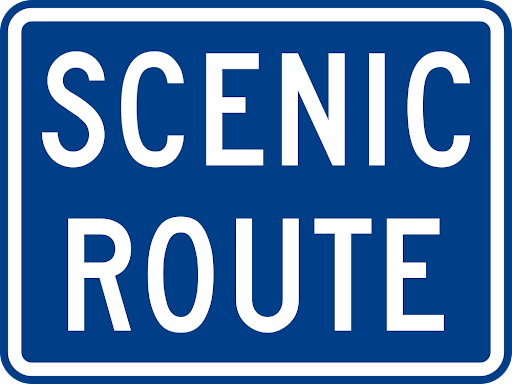
Plates Across America Scenic Route Sign
In the Plates Across America® game, you (virtually) travel across and throughout the country.  There are the country-spanning routes that serve as the main travel options, but as you travel these longer routes, you will unlock shorter ones, most of which are famous scenic routes and byways.


The Scenic Routes

There are over 180 different scenic routes in the game. These were chosen from some of the popular and most scenic highways and byways that exist across the United States.  Here's a sample of some of the scenic routes available in the game:

  • Beartooth Highway
  • Blue Ridge Parkway
  • Catskill Mountains Scenic Byway
  • Connecticut River Scenic Byway
  • Country Music Highway
  • Dalton Highway
  • Flint Hills Scenic Byway
  • Going to the Sun Road
  • Great Basin Highway
  • Hamakua Coast Drive
  • Michigan Gold Coast
  • Natchez Trace Parkway
  • Ohio River Scenic Byway
  • Overseas Highway
  • Pike's Peak Highway
  • Red Rock Scenic Byway
  • San Juan Skyway
  • Selkirk Loop
  • Seward Highway
  • Texas Hill Country
  • Top of the Rockies
  • Utah Route 12
  • Volcanic Legacy Scenic Byway

Scenic Route Signs

One of the main goals of designing our game was to instill a sense of traveling. One way we have done that is to reproduce the type of signs you would see along the way. We have a Blog Article that discusses the road and route number signs we added, but for the scenic routes and byways, they often have their own special sign designs. 

For example, the Texas Hill Country Trail scenic route includes these road number signs:

Plates Across America Texas Hill Country Route Signs

However, you will also occasionally see these special signs along the way which look like this:

Plates Across America Texas Hill Country Trail Scenic Route Sign

In the game, we reproduce this experience by also occasionally showing the special signs instead of the road sign numbers.


State-wide Scenic Route Signs

Plates Across America Colorado Scenic Route Sign

For many scenic routes, like the Texas Hill Country Trail, they are special enough that to have a dedicated sign, but not all scenic routes take this approach.  Many states will have their own scenic highway designation with a corresponding state-wide sign. For example, in Colorado, many of the scenic routes, like Top of the Rockies, will use the the same sign as shown at right.


National Park Road Signs

Plates Across America National Park Scenic Route Sign

Some of the game's scenic routes are road inside National Parks. These do not usually have any special designation along the road, but we did create a sign for them that fits in with the other signage you typically see along the roads in the parks (see image at right).


Conclusion

We hope this gives you a little extra insight into Plates Across America®.  There's a lot of game design work that went into creating these route signs and though this is not a prominent feature of the game, we feel that these subtle additions are important to give the players a better sense of the traveling dynamics of the game.

If you have not played our game before, try it out here for free:

Happy Travels!

Plates Across America Route Sign Collage


Friday, March 10, 2023

Game Location Types in Plates Across America®

Location Icons in Plates Across America®

As you solve the word puzzles in Plates Across America®, you (virtually) travel along various routes across the country and visit thousands of interesting locations. In the game, we have created a number of different types of locations which have special significance. 

Some of the location types are the basis of the game's "Travel Goals" that help you win the game, while other types will unlock extra game features. Here we give an overview of all the various location types found in the game.

Collectible Location Types

To win the game, you must achieve 63 travel goals to complete building your flag (13 stripes + 50 stars = 63). Some of these travel goals require visiting a certain number of given location types. For example, visiting 25 state capitals, 10 caves, 5 ghost towns, are some of the possible Travel Goals. (You can read more in our Travel Goal Blog Article.)

Collectible Location Type Icons in Plates Across America®

Below are the 9 different collectible location types that serve as the basis for Travel Goals. The image to the right shows the icons we use to represent these location types:

  • Bridges
  • Caves
  • Ghost Towns
  • Mountain Passes
  • National Monuments
  • National Parks
  • State Capitals
  • Tunnels
  • Waterfalls

Remaining Location Types

There are dozens of other types of locations, many of which will unlock a "Lightning Round" when visited. (See our Lightning Round Blog Article for an explanation of that feature.)  A few of the more interesting ones and their icons are shown below.
Plates Across America® Location Type Icon Highlights

In all, there are 44 different types of locations in the game. Here's the full set of them along with the icons we use to represent them.
All Location Type Icons for Plates Across America®

Conclusion

We hope this gives you a little extra insight into Plates Across America®.  There's a lot of design and data work that went into creating these location types and though this is not a prominent feature of the game, we feel that these subtle additions are important in giving the game more visual appeal.

If you have not played our game before, try it out here for free:

Happy Travels!

Tuesday, December 6, 2022

Plates Across Americe's® Badges and Achievements

Achievements Page
Achievements Page

When you play Plates Across America®, you will earn "badges". Some of these are directly related to the single-player game's Travel Goals, some are earned for achievements in the two-player game and a few others for players that make contributions to the game.

Since it takes a while to accumulate all the different types of badges, we thought it might be interesting for newer players to see the full set of our badges and to find out how each one is awarded. We add new badges from time to time, so there may be new ones by the time you read this article.

Achievement Levels and Coloring

For all the badge types, there is a range of achievement levels. These levels will correspond to some minimum value needed to earn the badge.  As you reach higher threshold values, the color of the badge reflects the increasing achievement level. The coloring scheme for the achievement levels is shown in the image below for the Miles Traveled Badge.

Types of Badges

Miles Traveled Badges

We start with the simplest one to understand: the miles traveled badge. This is based on the total number of miles you have traveled while playing the single player mode. The achievement level thresholds for this badge are 100, 250, 500, 1000, 2500, 5000 and 10000 miles.

Miles Traveled Badges

Collection Badges

The core concept for winning the single player mode is the "Travel Goal". You can earn Collection Badges as you reach travel goals. Examples of travel goals are:

  • states you have traveled through;
  • license plates you have collected;
  • scenic routes you have traveled; and
  • locations you have visited for the different "location types".

Here are examples of some of the badges you can earn as you achieve travel goals.

Collection Badges

Location Badges

As you travel in the single player game, you pass through (or near) cities, landmarks and other man-made, natural and geological places of interest. You can collect these places to reach different Travel Goals. The kinds of places you can collect include:

Location Badges
  • state capitals, 
  • national parks, 
  • national monuments, 
  • bridges, 
  • caves, 
  • ghost towns, 
  • mountain passes, 
  • tunnels, and
  • waterfalls.


Two Player Game Badges

When two players compete against each other, we call this a "Race". In a race, each player is given the same 10 puzzles. There is a time limit for each puzzle. The player that enters the best answers wins the race. You can get badges for competing in and winning enough races.

Two Player Game Badges

User Contribution Badges

The final set of badges we have are not for in-game achievements, but are for players that have helped improve our game. There are a few ways users can help to improve the game:

Dictionary Words

Dictionary Badge

It is more challenging than you might think to build a good dictionary, and even harder to get a large group of people to agree what should and should not be included in a dictionary. Therefore, we acknowledge that at any point in time, our dictionary will not be complete and it will evolve. Because of this, players can suggest words to be added to our dictionary.  

When your answer is flagged as being incorrect because it is not in our dictionary, we provide a link you can use to submit it to us. We review these submissions and if the word is accepted and added, we acknowledge your contributions with the "Pit Crew" badge.

City Facts Badge

City Facts Badges

As you travel in the single player game, your pass through and near cities, towns and other locations of interest. To add to the feeling of virtual traveling and to provide players with some interesting context on the places being visited, we have a "City Facts" feature that gives some interesting trivia, facts and history of the locations. 

There are tens of thousands of places across the country, so it is hard to know about each and every one of them.  However, if a player is acquainted with the area, they may know something interesting about it that we do not. In the game, we allow players to contribute and share that knowledge by sending it to us for review.  We will research the suggestion and if it is accepted, we acknowledge the effort with the "Historian" badge and also give attribution to the person that submitted it. 

Early Adopters Badge

Early Adopters Badge

Plates Across America® has evolved a lot since the early versions. We constantly iterate to make the game better and better. We can only do that by having real players try out the game and give us feedback.  Some give us explicit feedback, while others provide it indirectly by what they do and do not do as they play the game.  

To thank those people that have played earlier versions, we give them the "Trailblazer" badge.  The earlier a player joined, and the more they have played, the higher the badge level.

Closing Comments

We hope this overview of the game's badges was informative.  If you have never played Plates Across America® before, you can start acquiring badges by playing here:

https://platesacrossamerica.com

Happy Travels!

Saturday, October 8, 2022

Designing the Vehicle Avatars for Plates Across America®

Initial vehicle avatars
The vehicle styled avatars in our game was one of the last big features we added before we undertook our recent, major redesign. Not only can you choose which type of vehicle you want other players view for you, but you can also customize your avatar with different paint colors, accessories and modifications. Many players liked the vehicle avatars so we did not change it at all when we recently relaunched with our new version of Plates Across America®.

Back when we added this feature, we created 16 vehicle types since we wanted to give you a wide variety of avatars to choose from. We still have a long wish list of vehicles we want to create and add. In the coming weeks, we plan to add a number of new vehicle types, so stay tuned as we roll them out. These will all be fun additions to our vehicle avatar choices.

Below, we give a brief "behind the scenes" look at the process we use to create these vehicle avatars.

Designing the Avatars

Idea Phase

Cars, bikes and trucks are rich areas for ideas, especially when you consider not just the contemporary offerings, but all the vehicles throughout history. There are also appearances in popular culture to add to the richness of choices. Thus, coming up with the initial ideas is easy, but there are some limitations to consider:
  • Variety - we do not want to have avatars that are highly similar, so we try to find a "category" or "type" that is distinguished from the others.
  • Copyright - as much as we would like to offer avatars like the Batmobile or other vehicles from popular culture, we also very much like not being contacted by lawyers with cease-and-desist letters or seeking royalty payments.
  • Priority - we needed to consider which vehicles will have the most appeal and interest for players.

Sampling Phase

Once we have settled on the type of vehicle, we hunt around the Internet (usually using Google's image search) for examples fitting this genre. We do not use these images directly, but they serve as inspiration for our avatar drawings. We look for images showing a nice clean side profile as that is how all our avatars appear. We sometimes need to horizontally flip the images as our avatars face to the right.

Drawing Phase

We use the open-source program Gimp to do the design (it's like Photoshop, only better). The trickiest part of the design work is planning the "layers".  

We use the Scalable Vector Graphics (SVG) format to render the avatars on our website and Gimp supports this with its "path" feature. The SVG format is more flexible that using plain old GIF, PNG or JPG images and it allows us to more easily provide the customization feature. We actually use multiple SVG images, one on top of the other, so that we can "insert" an accessory or change color. For example, look at our convertible avatar below:
Blue Convertible Vehicle Avatar
Notice the black door guard band across the body. When you change the color of the car, we want only the body to change color and not the door guard, i.e., we want this:
Yellow Convertible Vehicle Avatar
We achieve this by putting the body drawing on one layer and the door guard on a layer above it. Then we can change only the body color, redraw and the black body guard is rendered over the body's yellow coloring.  

This layering approach is a common pattern used in most design software, including Gimp, so we are able to create each SVG layer in its own Gimp layer. Notice that the rear view mirror of the vehicle is also in the upper layer and gets drawn over the body color too.

We also have to consider the customizable accessories for the vehicle when we plan out the layers. For example, adding purple stripes like this:
Yellow Convertible Vehicle Avatar with accessory
means we need another layer between the body and the door guards since you probably would not paint stripes over the rubber door guard in real life.  When a vehicle has lots of different accessories, the layer planning gets more complex.

Coding Phase

We then use the "export path" feature of Gimp to output a separate file for each SVG layer. These files will become part of our source code. Inside our code, we maintain a list of all available vehicle types and what accessories it has. We add the new type to that list, its accessories and include the names of all the new SVG files. We also set the game cost for the vehicles (in "ride points") and decide at what point in the game the new vehicle will be "unlocked" and available. Vehicles get unlocked in groups as you reach milestones, so here we determine which group it should be in.

Van Vehicle Avatar

We have a special vehicle test page which allows us to view the result and visually verify it before we make them part of the next game release.  An important part of this visual verification is to make sure the left-facing, mirror image looks correct.  In our two-player game, we render the player's avatar in the default right-facing view, but their opponent is mirrored so that the avatars appear facing one another.

Conclusion

We hope this glimpse into the design process for our vehicle avatars was interesting. It can sometimes be a tedious chore to draw out all the layers of a new vehicle, but it is always exciting at the end when it all finally comes to life as a new avatar choice in Plates Across America®.

If you have never tried our game before, please do here:


Happy Travels!


Tuesday, September 27, 2022

Plates Across America's® Trip Check Feature

Trip Check
We recently introduced a new feature we call "Trip Check". Every 10 puzzles, Plates Across America® now reports how far you have traveled from your answers to those last 10 puzzles. You can track your game progress for the day, the week or for all time. There is also a new Trip Check leader board so you can compare your scores to other players.

We had gotten feedback from our players that something was missing in the single-player game. Something was needed to break up the longer routes and to be give more discrete feedback on a player's game progress. This is what the Trip Check feature is meant to address.

Trip Check Dialog

Trip Check Dialog

After every 10th answer, you will now see a dialog as shown on the right.  This tells you how far you have traveled since the last Trip Check. It tracks your best score for the last day (24 hours), the week (7 days) and for all time.  

The feature saves the best scores for all players, so during the Trip Check you  can see how your latest score compares to all of the best scores and let you know if you have beaten any of them.  

When you achieve a new high score, you earn points which you can use to help customize your vehicle avatar.

Stats

Whenever you want to see you best daily, weekly or overall Trip Check scores, just visit the "STATS" page under the "MY STUFF" menu option (see below).

Game Progress stats

Leaderboard

The new leaderboard page shows three columns, one of the daily, weekly and overall best scores. It tracks the scores for all players so you can see what you need to score to climb up the leaderboard. You can access it from "TRIP CHECK" in the "LEADERS" menu bar option (see below).

leaderboard

Final Thoughts

We are pretty excited about this new Trip Check feature. Our preliminary testing showed it to be a compelling addition to Plates Across America® and our initial user feedback has been very positive.

Try out this new feature here:

https://platesacrossamerica.com/demo/puzzle

Happy Travels!


Sunday, August 28, 2022

Race Game Redesign for Plates Across America®

Plates Across America®  Race Logo

We've recently finished a significant redesign of our two player "Race" game. The original design would wait until the two players were paired up before starting the game, but this turned out to be a terrible way to introduce people to the game. When a new player encounters the game for the first time, it is better to allow them to begin playing immediately. This was not as simple a change as it may seem: with software, changes are often never as easy as they initially seem.

One of the other design improvements we made stemmed from this Race game redesign. If you are a new player that is unfamiliar with the game, you may be reluctant to start a game without knowing how to play. We added a new "warm up" page where players can try out the word puzzles to get acclimated to the race game and rules before taking on an opponent.

Plates Across America® Race Game Warmup

You can start the two-player game here:

https://platesacrossamerica.com/demo/race

Or you can try some warm up puzzles first here:

https://platesacrossamerica.com/demo/warmup

Happy Travels!

Sunday, May 22, 2022

How to Get the Best Score in Plates Across America®

puzzle

In the Plates Across America® game, the quality of your answer to a puzzle will determine how far you travel: anywhere from 1 to 6 miles.  But what constitutes a "good" answer?  The simplest statement is: the more characters there are, the better it is. However, there are a host of more refined scoring rules that come into play. This article covers some of the more important ones and explains the rationale behind them.

Pluralization

Pluralizing a word adds 1 extra character without much additional cleverness. If one person comes up with a 7 character answer and then tacks on the "s", should they get the same score as the person that thought of a more "natural" (non-pluralized) 8 character answer? We think not, so a non-pluralize word will score higher than a pluralized word of equal length.

Lemmatization

Similar to the pluralization reasoning, there are a number of other ways to easily tack on extra characters. For the puzzle "SWR", the answer "swear" is valid but short and it does not require any more sophistication to pad some characters and make it "swearing". However, the word "steward" is longer than the word "swear" and deserves more credit, even if the person did not think to tack on an extra "ing" to that word. 

The process of taking a word and reducing it to it "base" form is called lemmatization. When scoring answers, we will prefer the "lemma", or the "root" word to shorter words with some simple extensions.

Compound Words

The game does not permit hyphenated words, though there is a fine line between these and compound words. For the valid compound words, we assign a slightly lower score than the other words of equivalent length. We believe that the person coming up with one long word should get more credit than a person that just tacks two short words together.

Summary

Though word length is the predominant means we use to measure the answer quality, we have rules in place to prevent rewards for padding an answer's length with trivial extensions.

If you have not played our game before, try it out here for free:

Happy Travels!


Sunday, May 15, 2022

Puzzle Difficulty in Plates Across America®

Puzzle Difficulty Comparison
If you have played Plates Across America® for even a little while, you will be well aware of the fact that not every puzzle is equal in difficulty.  

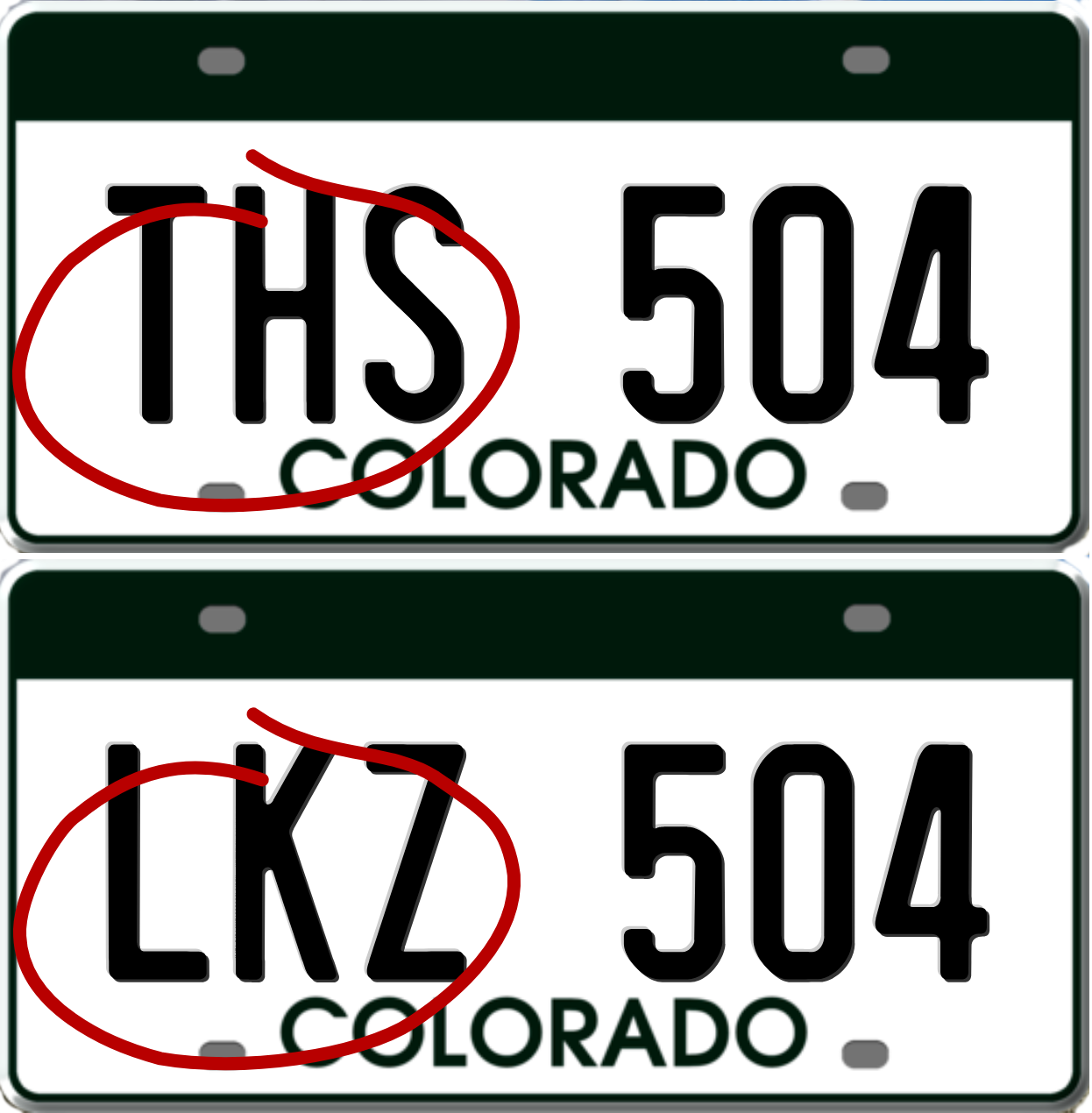
The puzzle "THS" is much easier to solve than "LKZ". If we showed only the hard puzzles, it would be a frustrating experience. Conversely, if we only selected the easiest puzzles, the game would not be very challenging and people would get easily bored.  

Therefore, the balance of the puzzle difficulty is an important part of the game play for us to get right. This article gives a few details about how the game determines which puzzles to show.

What Makes a Puzzle Difficult?

On seeing a puzzle for the first time, most people immediately are drawn to words with those letters near the beginning of the word. Secondarily, words where the puzzle letters are close together in the word tend to pop up in people's minds. Conversely, words where the letters are scattered throughout the word tend to be harder to find. For each of the game's puzzles we compute a "letter position difficulty" score which serves as one of the factors that determines a puzzle's complexity.

Among the early ideas we considered was that the more possible solutions the puzzle had, the easier it may be to solve. However, this is a flawed line of thinking because not all words are created equal. Even if the puzzle had only one possible solution, if that word was in everyone's common vocabulary, it might be relatively easy to solve. Conversely, a puzzle that has 100 solutions could be very hard to solve if all those words were relatively obscure.

We decided to use word frequency to gauge how common words are. This is based on looking at how often words appeared in large collections of text documents (e.g., how often the word appears across all the Wikipedia articles). We take these word frequencies across all possible solutions and derive a "frequency score" for the puzzle. This better represents how easy it will be for someone to come up with an answer rather than the shear number of possible solutions.  

We pre-compute the "letter position difficulty" and the frequency score for each puzzle and then blend those together to arrive at an overall difficulty score. It is this final difficulty score that determines how frequently the puzzle will appear in the game.

How Does the Game Pick the Puzzle?

With each possible of the possible 14,000+ puzzles, we assign a difficulty score to them as described above. We then group them into 6 difficulty level tiers from easiest to hardest. The puzzle selection is then done randomly, but with a two level selection scheme.

  • First, we randomly choose one of the 6 difficulty tiers. This is a weighted selection so that the easiest tier is chosen 50% of the time, the second easiest 35% of the time, then 9%, 3%, 2% and finally 1% for the most difficult puzzle tier.
  • Then, from within the tier, randomly choose one of its puzzles (uniformly selected).

In Closing

The puzzle selection scheme is an important part of the playability of the game, but it is fairly involved to determine the relative difficulties of all the game's word puzzles. We think we have struck a good balance in our game, but always looking to improve if you have suggestions for us.

If you have not already played, try our game and send us feedback about what you think:

Happy Travels!


Thursday, April 21, 2022

Do you really need that Mobile App?

Plates Across America PWA
Installed PWA
Plates Across America® does not currently have a Mobile App. Shameful, isn't it? In today's world, this is a serious liability, since a mobile app has become expected, especially for a game. We would certainly like to have a mobile app, but the cost to develop one was not in our small, bootstrapped, startup budget.  

Our plan was to use the browser-based version to gauge interest, improve the game play and then assess whether enough people are interested to warrant investing in a mobile app. Currently, we are not so sure we will ever make that investment. This article is about why we are having second thoughts.


Why a Mobile App?

As we built the game, we invested a lot of time to make the game's interface "responsive": i.e., ensuring it displays well on devices of all sizes. Presently, it plays just fine on any mobile phone, tablet or really on just about any device which has a modern web browser. Last we checked, that means most all devices, probably even your refrigerator. 

The more we played on other devices, the more we began to ask ourselves exactly why do we need to spend tens of thousands of dollars developing a mobile app? The only thing we will get for all that money is the ability to be in an app store. After this hefty expenditure, the game would have no new features and the player's experience would not be any better. The fact that there are two (main) mobile app ecosystems, iOS and Android, makes it even worse: a developer often needs to implement the same features three times. 

There are cross-platform development frameworks aimed at helping to tame this mobile Tower of Babel. However, there is a dizzying array of (still-maturing) frameworks (e.g., Flutter, React Native, Ionic) each of which result in being locked into the particulars of their custom framework and the added expertise that requires. The dirty secret of these cross-platform frameworks, which like to boast statistics like "95% cross-platform code", is that the remaining 5% requires writing native device code on each platform. So instead of needing expertise in 2 platforms, now you need it in 3 and not the 1 as they promise. These are not (yet?) a panacea for the multi-platform problem.

Progressive Web Apps (PWAs)

PWA logo
It turns out, we were not the first to question the need for a mobile app. Along the way we learned about "Progressive Web Apps" (PWAs).  A mobile app is just a container that runs your software, but so is a web browser. While native apps use the Swift or Kotlin programming languages and their respective UI frameworks, web browsers use the more ubiquitous HTML, CSS and Javascript technologies.

The PWA standard was developed to leverage the common browser's tech stack, while adding some features that put the browser container on par with the native mobile app container. The noticeable visual differences go away with PWAs (e.g., search/url bar, buttons): it will look and feel like a native app. It even presents the user an "install" option to add an icon to the device's home screen. Unfortunately, the PWA standard is implemented by some, but not all web browsers, for reasons explained below.

Browser Support for PWAs

Browsers
Apple makes billions of dollars on the fees they charge for their App Store. They have little incentive to support PWAs which is why their Safari browser does not (and may never) fully support PWAs. PWA is an open standard which means that you would be able to install it on Apple devices without being forced through their App Store and their monopolistic commission fee structure. 

Google, on the other hand, was the principal driver of the PWA standard and fully supports this in their Chrome browser. Google has even teamed up with Microsoft in their PWA efforts to try and loosen Apple's grip on the mobile app market, so even Microsoft's Edge browser is PWA friendly.

The Future versus Today

Will PWAs emerge to eliminate this multi-platform hell or to help level the app store playing field? We hope so since the current state is terribly illogical, highly inefficient and disturbingly authoritarian. However, our game exists in the present and a generation of people have been trained to go to app stores to find games, so what should we do? It turns out there is a solution ... but only sort of.

PWA 2
Google and Microsoft have developed tools that make it possible to put a PWA into an app store. Bubblewrap is Google's suite of tools and Microsoft created the web site PWA Builder that makes these tools simpler to use. These work by creating a shell of a native app for each platform (iOS, Android and Microsoft), where this shell has just enough capabilities to render web pages (what iOS would call "web views"). It then sets up all the boilerplate config stuff to point at the web site that hosts the PWA.  Effectively, it is the devices's native container wrapped around a browser container with your code inside that. You can then take those automatically built packages/bundles and submit them to the various app stores.

We tried out this tool and were successful in getting listed on the Microsoft Store (see our listing). As of this writing, we have submitted it to the Google Play store and are waiting for them to review it.

In theory, we can submit this to the Apple App Store too, but we are not sure if we will. Being a PWA alone presents a risk they will reject it: they are hostile toward PWAs and dictatorial in their decisions. Apple also forces you to use Apple Pay if you want to be in their store (because, why not, who's going to stop them?). What is also true is that submitting to the Apple App store is about 100X more complicated than the other stores, so we could invest a lot of time for zero gain. (The following article drives that point home with some more technical detail: "I Built a PWA and Here is What I Learned".)

Summary

If the PWA standard continues to grow in adoption and people become less constrained in viewing app stores as the only means of acquiring software, there will be no need for Plates Across America® to have a mobile app.  However, that future is still uncertain. For now, we will continue to refine our browser-based version and see how it unfolds.

Happy Travels! (and please do Try Our Game for Free!)


Tuesday, March 29, 2022

No More Passwords

Plates Across America sign in page
New Sign In Screen

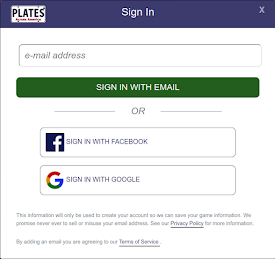
As we reconsidered redesigning Plates Across America®,, it dawned on us that the traditional email + password login scheme was not a good pattern for our game. People do not need the cognitive overhead of managing a password for a light, recreational game. They are more likely than not to forget it and then have to be subjected to the whole password reset email/awkwardness.

In general, passwords are quickly becoming obsolete with many sites always emailing you a "security code" anyway. Why not do away with the password altogether and embrace email as the authentication method?  Email has its security flaws for sure, but it is much better than it used to be, so much so that it is becoming universally used as an authentication method. If we were a bank, email alone would not suffice, but we are a game and we are not storing any important data for our players. 

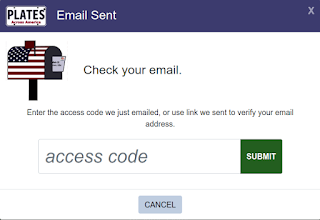
So we have ditched passwords at Plates Across America® and never looked back. The game should keep you logged in for a healthy amount of time, but if you move to a different device or restart your computer or browser, we'll simply email you a 6 digit access code to use to log back in. Keeps things simpler for us and our players.

security code screen
New Screen for the Access Code Entry


I hope our players agree that this is a simpler method, but send us feedback about your thoughts on the topic. Plates Across America ® 

Happy Travels!


Tuesday, March 22, 2022

The Creative Journey

Plates Across America® redesign
Whew! 

Over a year ago we wrote about our Plates Across America® game redesign and our expecting it to take a few more months. Well, if you define a "few" as "14", then we were spot on!

We lived for months with everything almost fitting together, but not quite, so kept shuffling ideas and code around. Once we had everything making sense, our early testers told us it was too complicated and it was back to the drawing board. Sometime in November 2021, it all clicked together and a few months later, Voilà!

We have not perfected the game yet as there are game play refinements to be made with help from the feedback of our early adopters. However, the early indicators say this is a vast improvement over our original version.

We encourage you to try it out and send us feedback. We have a very generous free trial period with no signup required:

Link to the Game

 New Features

Some of the features of the new version:

  • Travel Goals - visit 10 states, 50 waterfalls, etc
  • Bonus Routes - unlock a trip to Hawai'i or Alaska
  • Lightning Rounds - limited time puzzles for bonus points

And don't forget about our two-player "Race" game.  That is not much changed from the original version, but is still loads of fun to play with friends and family.

Happy Travels!

Monday, January 11, 2021

Plates Across America® Redesign and Lessons Learned

Plates Across America puzzle

We've been quiet the last couple months with regards to postings about Plates Across America®. We have been actively working on a major redesign of the game and it turned out to be a fair bit of work, complete with periods of "writer's block". We had lots of ideas for the game, but at times struggled to put them together into a coherent game story.

The initial idea we had for Plates Across America® was to combine solving license plate letter puzzles with the feeling of driving across the USA. Our first version of the game wound up being predominantly about the puzzles and it did not give a player a good sense of traveling. The first version was also too open-ended, requiring the players to determine what their ultimate goal was. The next version of the game seeks to solve these shortcomings.

We've had over a thousand people play the first version of the game. A few dozen found it enjoyable enough to return to play over and over, and a few dozen more more played it a handful of times. This was encouraging, but it also provided a strong signal that something was missing from the game.

Major Routes of Plates Across America Redesign
Major routes planned for new game design.

The general shape of the new game will be to “complete” the game, where completion will be defined by the goal of having “visited” particular places across the country.  A player will progress through “levels”, where each level will have a smaller goal of travel-based achievement. Traveling will still be done by solving the word puzzles, but there will be more emphasis on acquiring a collection of places visited to meet the goals. For example, when you have visited your 10th National Park, you will move to the next level.

We are pretty excited about how much this will improve the game.  Providing a good "travel" experience means we have more work to do than just writing the software. We'll need more data about routes and locations across the country.  We'll be working on curating this data and writing the software in parallel to help speed things up, but we still expect it to take a few months.  Our game continues to be available to play in its first version in case you are interested in seeing the basic premise of the game.

Plates Across America Demo Game


Saturday, September 12, 2020

Why Sign In to Plates Across America®?

Plates Across America sign in

Plates Across America™ provides a demo of its single-player game so that you can know if you would be interested in playing. We know that signing up for a new, possibly unknown service makes a lot of people nervous. However, the two-player racing game is not available in the demo and requires signing into our game. Why? 

There's a much longer article that could be written with the technical details, but the short answer is:

to improve security and prevent abuse. 

Once you provide the ability for more than one person to interact on a website, the potential for it to become a problem grows significantly. You would not be playing our game for very long if people started harassing you, whether it be with malicious intent, offensive content or trying to sell you something. 

Requiring people to log in, and verifying their email, provide a first defense to prevent anonymous people from doing bad things. As a second line of defense, even if some "bad actors" do sign up and begin to behave badly, we have the ability to block their account to ensure the abuse is stopped. Our terms of service outlines what we will not tolerate and ensures we have the right to deny access to abusers.

We hope this explanation gives you a better understanding of why we require signing up to play the more compelling two-person race game. If you are ready to sign up and try out the race game, just visit: 

Plates Across America™ sign-in page

Happy Travels!

Plates Across America fun car


Sunday, September 6, 2020

Free Games are Not Free

Plates Across America®  privacy focus
Imagine you are out shopping and are browsing through the aisles of your favorite store. After a while, you glance over and notice someone standing further down the aisle. They are staring at you and holding a clipboard. You were so distracted with what was on your mind that day that you just noticed them and you are not sure how long they have been there. Have they been watching you the whole time?

You bend down to pick something off the bottom shelf to look closer.  As you do this, you notice the person writing something down on the clipboard.  You put the item back, glance over and again, they frantically write some more.  You decide to move on to another aisle to escape their gaze. But they follow you, writing more as they go.

Being a little too creeped out by this person, you leave the store and continue your shopping elsewhere. As you enter the next store, you see that same person by the shopping carts. Again, looking at you and scribbling more on their clipboard. It's like the Twilight Zone. You leave the store immediately to drive home, now sufficiently frazzled.

As you drive, you are consumed with the thought of this person following you. Who were they? Why were they following? What were they writing? How did they know where I was going?

As you calm down a bit, you peek in the rear-view mirror. You see this person is now sitting in the back seat of your car. Startled, you scream. You pull over, demand they get out of the car and hand over the clipboard. You see that they have written down your every action. Every store you visited, product you touched, every turn you made in your car, how long you stopped at each stop sign, the radio station you are listening to and which songs you sung along to. The clipboard contains a record of your every action and behavior throughout the day.

The Internet

no privacy

How would you feel if something like that scenario happened to you in real life?  Would you be tolerate someone recording your every move no matter where you went? Would you allow them to follow you around all day? Would you be happy if that person was selling your information to anyone and everyone willing to pay for it?

Aside from the physical person and clipboard, that scenario is exactly what happens to you every day on the Internet and with almost every web site you visit.  The only difference is that the person with the clipboard is invisible (unless you know how to look). What nearly no one would tolerate in their physical life is being allowed to happen with their on-line life. Practically speaking, there is really no difference between these two scenarios nowadays.

There is a multi-billion dollar market in buying and selling your personal data and that of every other person on the planet. Most web sites participate in either writing on that clipboard, or buying the data it contains.

Should companies with web sites be allowed to

  • track your every move;
  • share that data with anyone they please; or
  • combine that data with the data from all other companies?

Not only do most web sites do this, it is currently deemed as the "right way" to run a web-based company.  The industry acceptance practice dictates that you are not entitled to any privacy. They all put "tracking pixels" on their site which enables them to see your every move. This is not limited to simple things like which web sites you visited, but can include recording every movement of your mouse, where you hover over, for how long and where you click.  The most valuable asset for these companies is the log of all your personal actions.

Free Games

Free Games caution

There is a well-known phrase:

"If the product is free, then you are the product."

This perfectly sums up what is going on with the "free" games out there. These are provided by companies that participate in this anti-privacy web culture.  You give up your privacy, they sell your data and you get to play for free.  What we like to say is that for these "free" games:

"They are only free if you do not put any value on your privacy."

Why does it Matter?

Humans are flawed. We can be manipulated to do things that do not make sense, that we do not need to do or even that we do not want to do. Most people would like to think they are immune to this, but no one is. Even the smartest psychologists, who are experts on the topic, admit that even they are susceptible to manipulation even when they know it is happening.  A good reference on the topic is: Influence: The Psychology of Persuasion by Robert B. Cialdini.

Deeply ingrained into our mental machinery are things that make us vulnerable to being manipulated. You and I are no match for the corporations that are peddling our private data.  They have got the manipulation game refined to such a level that most people do not even notice it happening. The ramifications are scary. The fact that most people are not aware of this, or do not care about it, is even scarier.

Privacy-focused, Family Values

Plates Across America privacy

At Plates Across America™, we do not not engage in any of these unsavory practices and we promise never to do so. The game was conceived, designed and developed by a family (wife, husband and daughter) with the philosophy that we should treat you the way we would want our family members to be treated. We are not interested in selling your data or exploiting you in any way.  We will not annoy you with advertisements, excessive emails, newsletters, on-line tracking, solicitations or any of the other nonsense most other companies seem to think is an acceptable way to treat you.

Focusing on privacy and respecting your inbox means rejecting the current accepted practices of the industry.  This is like trying to swim upstream in a roaring rapids. However, just because it is hard does not mean we cannot try.  We like to think it is only a matter of time before there is a rejection of the current norms and that we will be on the right side of history. Change has to start somewhere, so maybe our efforts can contribute to this in some small way.

Nothing Hidden

Plates Across America respects privacy.

We charge a fee for our game because we think the honest way of doing business involves a fair exchange without any hidden costs (such as giving up your privacy).  We aim to provide hours of entertainment, and we only hope for a very small fee in return.

A movie gives 2 hours of entertainment and costs $10. A cup of coffee costs nearly $3 and lasts less than a hour.  Our game costs less than both of those and provides many, many more hours of entertainment.

We do not try to trick you into buying the game. We provide a demo version so you can understand whether it has any appeal to you, and then a generous free trial period that gives you access to the full game and all its features. Only then, once you know exactly what we have to offer, do we ask whether you feel it provides enough value to justify the cost.

We encourage you to try our game and support the idea that privacy-focused companies can succeed. 

Start with our free demo:

Play the Free Demo Game

Happy Travels!
Friday, September 4, 2020

Answer Scoring in Plates Across America®

Score Comparison Screen

The main premise of Plates Across America® is to complete a route in as few puzzles as possible. The general rule is:

The longer the answer, the further you travel. 

If you play the game in our "Race Mode", at the end of the race it will show all the puzzles with your and your opponent's answers side-by-side (see image at right). If you compare the scores, you might see something that does not match the "longer is better" rule. That is because there are some exceptions to that rule. This article explains the nuances of how we calculate the scores to help explain when the rule does and does not apply.  

Lemmas

The word "lemma" has multiple meanings, but here we mean it to be the "root" of word. For example: "wanders", "wandered" and "wandering" are related words and share the same lemma word "wander".  This concept is important in the scoring because we reward a good vocabulary more than someone's ability to creatively add extra letters (also known as "stemming" words). For example, someone should not get a higher score than you just because they to added a trailing "s" to pluralize the word.

Plurals

The important part of understanding how plurals are scored is awareness that there are two different cases.

  • Case (1) Both the plural form and that word's lemma both match. In this case, pluralizing the word is somewhat superfluous and is only really serving to increase the letter count.
  • Case (2) The lemma of the word does not match and the pluralized form is required to be a valid answer. i.e., the ending "s" is required to make the word match.

For Case (1), the plural answer will be scored the same as the singular.  There is no penalty for using the plural form, but also there is no credit for the extra letters.

For Case (2), the plural answer will be ranked below all the other non-plural answers whose lemmas match the puzzle. For example, if the puzzle is "BDS", then "bedside" would score higher than "bedazzles" even though "bedside" has fewer letters. It is far easier to find a word with "B" and "D" and to pluralize it then it is to find a non-plural word with "B", "D" and "S".

Word Frequency

Once all the possible solution words are sorted out by whether they or not they are lemmas and their lengths, the next thing we consider is the word's frequency.  All other things being equal, the less frequently occurring words will score higher than more common, everyday words.

For example, for the puzzle "ADT", the word "audit" would score higher than "adult" even though they both have 5 letters. The word "audit" is not used as frequently as the word "adult" in normal usage. Note that the score advantage based on word frequency is not as dramatic as it is for the lemma vs. non-lemma case: it provides some advantage, but the word length scoring is more important.

Summary

Though word length is the prime element in determining the quality of the answer, it is not the only factor. Understanding the nuances of scoring will help you finish routes faster and score better in the game.

If you have not tried the game, and are interest, here's a link:

Game Demo

Happy Travels!

Monday, August 10, 2020

Interesting Puzzle Stats

Plates Across America® puzzle

If you have played Plates Across America™ and understand how the game's word puzzles work, you might have asked yourself questions, like "How many puzzles are there?".  In this post, we try to provide some interesting facts about the underlying puzzle data. In case you have not yet played the game, we'll first briefly go over how the puzzles work, however you could also familiarize yourself with the game by trying the free demo here:


Puzzle Rules

A "puzzle" is three letters, where the order matters. A valid answer to the puzzle is a dictionary word in which those three puzzle letters appear and are in that same order. The letters do not have to be consecutive within the word and can appear anywhere as long as the ordering is not violated. Some examples:

    PuzzleValid Answers
    ABTabout, tabletop, bicarbonate
    IOLidol, airfoil, antisocial

Most important to the game is that (generally) the longer answers are worth more than shorter answers. The longer the answer, the further you travel with each puzzle. The goal is to try to cover the distance in a route with the fewest possible puzzles.

There are a few nuances to the scores assigned to the answers so that it is not always strictly that longer ones score higher. For instance, if you just add an "s" to the end of a word to pluralize it, that would have the same value as the non-pluralized word even though it has one more letter. The full run-down of all the scoring rules will be covered in a future blog post.

The Dictionary

The puzzles are derived from the words in the game's dictionary. We built this dictionary trying to cover the most common word usages. For example, though the dictionary does include a lot of medical terminology, it is not trying to be comprehensive to cover all the more esoteric words. 

Our dictionary is not perfect, which is why we provide an in-game feature to allow players to tell us when they find something we are missing. Here's a picture of the "Report Word" link we show in the game:

Suggest addition to dictionary

So, how big is our dictionary? As of this writing, it has 98,614 words. Every week, we add more as our players report words that should be added to the dictionary.

The Puzzles

All the puzzles we show in the game have at least one valid dictionary word as its answer. In theory, there are 26 * 26 * 26 = 17,576 different 3 letter combinations. However, not all these combinations have a matching word, e.g., "WZX". In the end, there are only a total of 14,863 puzzles in our game. 

Some other facts:
  • For the two example puzzles given above, ABT has 1,045 matching words and and IOL has 2,075.
  • The puzzle with the most matches is IES with 18,080 different matching words.

The Answers

If you add up all the valid answers across all of the 14,863 puzzles, you would get that there are 8,071,767 total answers.  That means that the average puzzle has 543 valid answers.

Other facts:
  • With a dictionary of 96,614 words, this means that the average word matches 82 puzzles.
  • Since a valid answer must contain at least 4 characters, the fewest puzzles a word can match turns out to be 3. e.g., The word "pool" only matches POO, POL, and OOL.

Parting Thoughts

We hope you found this small sample of game statistics interesting.  If you have questions or think of anything related to the game's data that you are interested in, please let us know.

Happy Travels!